Opportunity Development & Qualification
Screen the opportunity, technical fit, key risks, capability gaps and specialist needs before committing resources.
Explore pathway →
Opportunity, Tender & Project Support
BioGeoFate supports organisations pursuing and delivering technically complex environmental and industrial projects. Engagement can begin with an emerging opportunity or tender and continue through requirements analysis, technical concept development, proposal preparation, specialist coordination and post-award technical advisory.
Choose a simple entry route
The three routes below provide a simpler entry into the detailed three-phase, nine-pathway lifecycle.
Clarify the challenge, requirements, evidence and data gaps.
Opportunity & Development →02Compare evidence, technologies, operating fit, risks and alternatives.
Decision support →03Move through concept, tender, pilot, implementation support and optimisation.
Solution & Tender →Project lifecycle
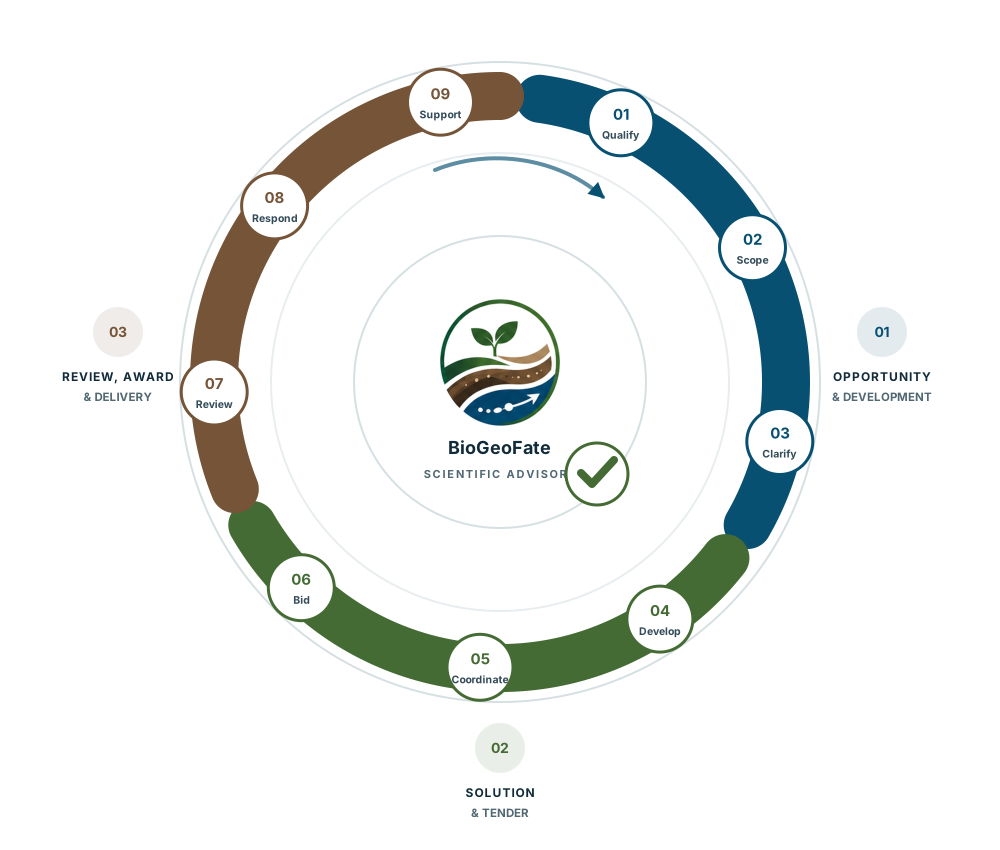
The lifecycle below connects three project phases with nine BGF support pathways. Select a phase or pathway to move directly to the relevant level of detail.
Where BGF can support your project
Support can be scoped around one stage or connected across the wider opportunity, tender and project lifecycle.
Project phase
Understand the opportunity before substantial bid resources are committed.
Screen the opportunity, technical fit, key risks, capability gaps and specialist needs before committing resources.
Explore pathway →Turn complex procurement documentation into a clear technical scope and traceable requirements.
Explore pathway →Identify what must be clarified before a defensible technical solution or proposal can be developed.
Explore pathway →Project phase
Develop the technical substance and coordinate the inputs required for a credible proposal.
Develop evidence-based technical concepts that respond to the project requirements and operating context.
Explore pathway →Bring together the specialist capabilities required to support the proposed technical solution.
Explore pathway →Translate the technical solution into a clear, compliant and defensible tender response.
Explore pathway →Project phase
Maintain technical continuity from final bid review through clarification, award and project delivery.
Review the technical submission before it reaches the client and identify material gaps or inconsistencies.
Explore pathway →Support technical clarification cycles, presentations and solution refinements between submission and award.
Explore pathway →Provide specialist technical continuity as the project moves from proposal into delivery and performance review.
Explore pathway →Pathway detail
Each pathway can be commissioned independently or combined with adjacent stages under one agreed scope.
Independent technology assessment
BGF can structure an independent comparison without starting from a preferred vendor or treatment route. The depth depends on the available evidence and project stage.
Identify credible mechanical, chemical, biological, nature-based or combined pathways relevant to the challenge.
Compare the options against feed characteristics, climate, footprint, utilities, operator capacity and project constraints.
Examine supporting data, references, claims, maturity and the relevance of available performance evidence.
Assess process logic, key dependencies, residuals, monitoring, operability and material technical risks.
Define what needs to be tested or demonstrated before a larger technical or commercial commitment.
Translate the comparison into a defensible preferred route, shortlist or next-step validation plan.
Typical deliverables
Deliverables are selected around the project stage, available evidence and the technical decisions that need to be made.
Selected project situations
Representative situations show how scientific advisory can connect with procurement, technical development and delivery without turning the service into generic proposal writing.
Scope interpretation, data gaps, treatment concepts, partner inputs and technical proposal development.
Assessment of separation, conditioning, treatment and disposal or resource-recovery pathways.
Technical screening of treatment routes, operational constraints, partner needs and implementation logic.
Independent comparison of technologies, proposal claims, evidence, assumptions and project fit.
Evidence snapshots
Depending on the assignment, BGF can frame the work around four linked questions rather than a generic report.
What decision, performance gap, environmental challenge or project requirement needs to be resolved?
What site data, literature, technical documents, supplier information or operating evidence are relevant?
Which treatment, technology, project or validation pathways are credible under the actual constraints?
What can be recommended now, what remains uncertain, and what should happen next?
Engagement models
A specific technical question, review, assessment or agreed deliverable.
Project-specific support across selected stages from opportunity assessment through submission or clarification.
BGF works alongside the client or project team for an agreed project period and defined work packages.
Ongoing access to BGF expertise across multiple opportunities, projects or technical questions.
How We Engage
Understand the project, opportunity or technical requirement.
Define the questions, deliverables, timeline and required expertise.
BGF provides an appropriate scope of services and commercial proposal.
Work begins under the agreed scope and project arrangements.
Findings, recommendations and technical support are delivered according to the project needs.
Common engagement questions
Yes. Support can be defined around a specific technical work package, review role, decision point or project stage and coordinated with the wider team.
Yes. The assessment can compare technical claims, evidence, project fit, operating implications, risks and validation needs against the project requirements.
Yes. Early work can focus on opportunity qualification, problem definition, data gaps, solution options, partner needs and technical readiness.
Yes. Support can include test framing, evidence requirements, interpretation, technology comparison and the questions that should be resolved before scale-up.
The project requirement is first clarified, followed by an agreed scope covering the questions, deliverables, timing and level of technical involvement.
Confidential project information can be exchanged under the confidentiality arrangements agreed for the assignment. Initial public-form submissions should remain non-confidential.
Start the right conversation
Initial enquiries help establish the requirement. Detailed technical work follows an agreed scope of services.